Getting off the beaten tracks of Litchfield National Park to complete ICS plots across park
Rangers in Litchfield National Park have been getting out to the more remote parts of the park over the last 4 weeks to complete important work on detecting and monitoring change in ecosystems over time. The program is underpinned by the integrated conservation strategy (ICS) for Litchfield National Park.
Beginning in mid-September, Litchfield rangers visited over 50 sites across the park that would otherwise rarely see human interference. Photo sampling specific sites annually offers great insight and information regarding threats to the park. Over time, changes to flora and fauna are very noticeable. The photos are, of course, just one part of the story, as various other environmental data is collected providing further information around presence and impact of feral animals, weeds, and some of the native species seen in these habitats. The program is set up to detect change in the many different habitats seen across Litchfield and to monitor those changes over time, helping to give land managers and policy makers a basis to guide their decisions going into the future.
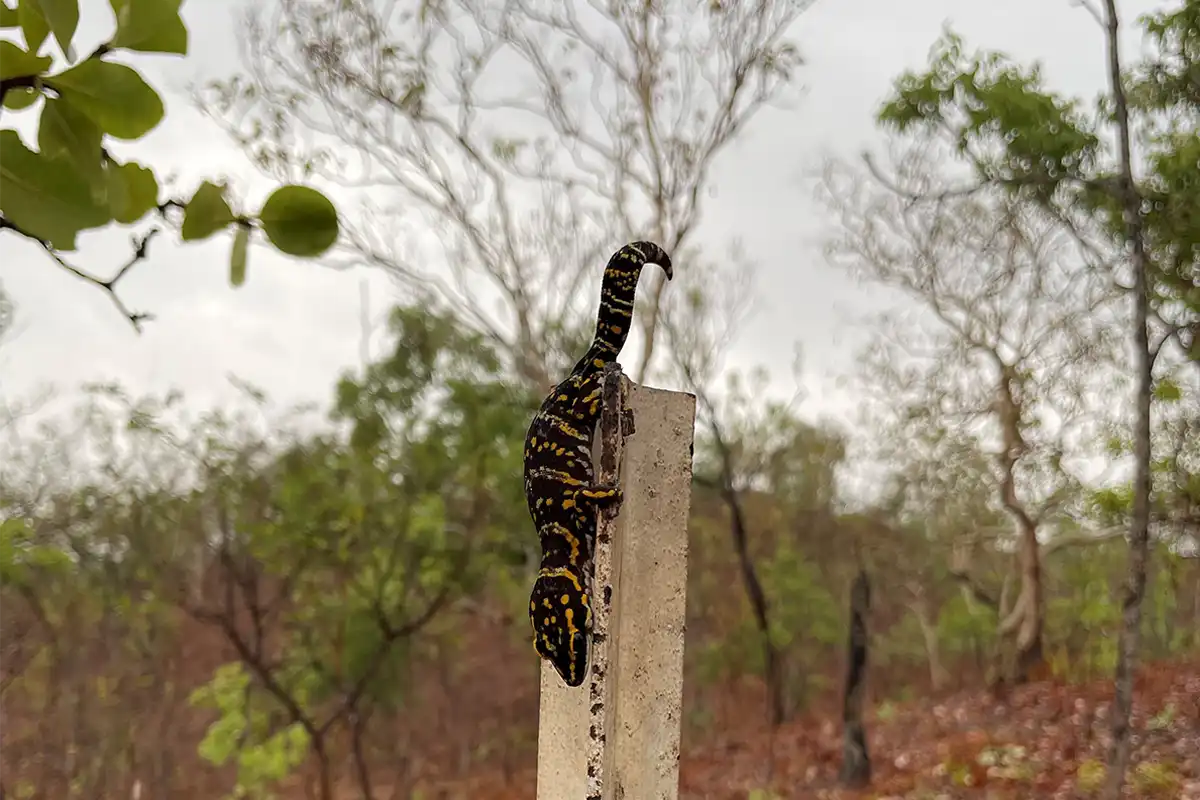
Some of the habitats monitored in Litchfield include monsoon forests, upland swamp, alluvial grasslands, callitris forests, riparian vegetation, and the several different types of woodlands (e.g. tabletop, drainage, sandstone, lowland, and melaleuca). For rangers, this means parking up on the side of a management track or Litchfield Park Road and walking several hundred metres into the bush to find those fabled red and white poles, marking out transects along a 40m stretch, and filling in the data sheets in the blistering sun. Think of it as a glorified treasure hunt.
The task was a great opportunity for the team to further explore the park and get to know areas they may never otherwise visit. Some of the most beautiful little spots are hidden away, out of sight, for all the local birds and bees, and wallabies and geckoes and snakes and spiders and all other forms of life big and small to live out their life.