Olive hymenachne control at Manton Dam
Located approximately 66 km south-east of Darwin, Manton Dam is a well-known and popular destination for jet-skiing, water-skiing, wakeboarding and fishing. Manton Dam can also offer much more than these activities, where visitors can experience and appreciate its natural values and biodiversity.
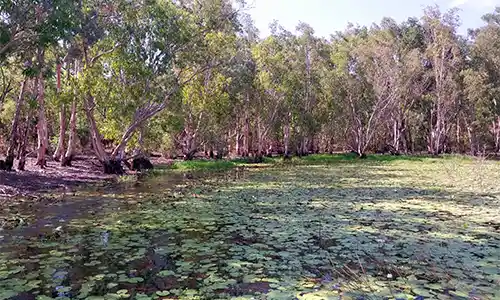
Visitors to the park can gaze out across the rocky outcrops and rugged hills, topped with woodland savanna and cycads, that drop into the calm, tranquil waters of the dam. The edges and shallows are lined paperbark trees and waterlilies, their scattered white and purple flowers a-buzz with insects early in the mornings. Vivid white and iridescent green flashes as green pygmy geese forage amongst the lily’s heart-shaped leaves. Thick banks of eleocharis spikerush line the shallower areas, and in the build-up months, the heads of magpie geese peer over the top, keeping a wary eye on visitors. Cormorants and darters dive amongst the myriads of small rainbow fish, sleepy cod and mouth almighty.
Manton Dam was built by the Australian defence force during World War II to be a reliable water source for the growing population and industry of Darwin. Completed in 1942, it is a small dam, holding approximately 14,000 megalitres. As time went by, Darwin’s growing population demanded a larger supply, so Darwin River Dam was built, and Manton Dam became a recreational area in the late 1980s.
Barramundi fingerlings are also released into the dam each year by the Darwin Aquaculture Centre to maintain a healthy population for keen recreational fisherman to catch. A couple of $10k barra being caught there during the Million Dollar Fish competitions keeps anglers trying their luck amongst the waterlilies!
Unfortunately, the recreational activities and natural values could be impacted by an invasive aquatic grass olive hymenachne - Hymenachne amplexicaulis. This grass is a weed of national significance that could spread rapidly as its small seeds may be transported by water birds and vessels. It has the potential to smother large areas of the dam’s shoreline, outcompeting the waterlilies and creating large floating mats with its thick buoyant stems and broad leaves.
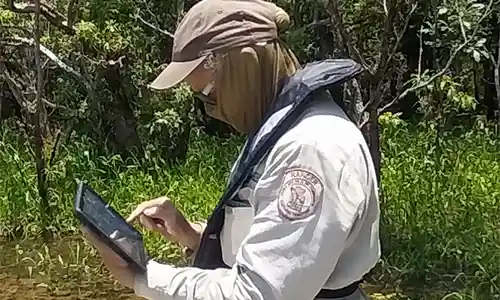
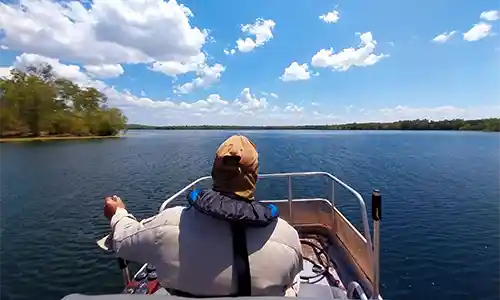
Thanks to ongoing management by Parks and Wildlife Commission rangers, the infestation remains relatively small and scattered around the shoreline. In October this year, the Darwin Urban Parks and Top End Parks Districts shared ranger efforts and resources to invest in three days working on the water, circumnavigating the dam, spraying and mapping the scattered populations of both olive hymenachne and mimosa. This reduced the amount of the weed to minimise the impact on the native vegetation and recreational use of the dam, with the hope that these weeds will eventually become locally eradicated.
This was a successful three days well spent maintaining the environment and Territory lifestyle!